
The history of action games: One Must Fall 2097
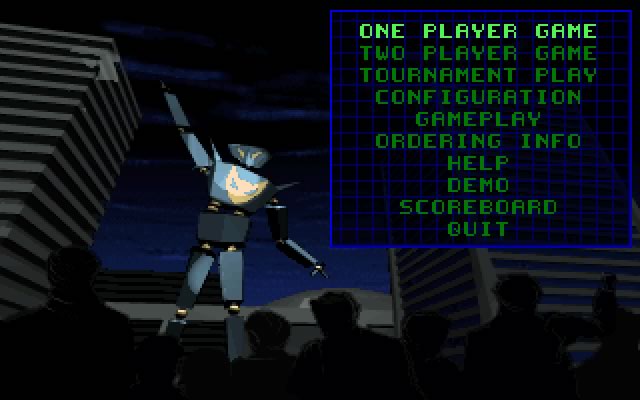
The game is set in the year 2097, a time when global corporations have quietly replaced governments as the real power brokers. At the center of it all stands WAR (World Aeronautics and Robotics), a mega-corporation that organizes televised tournaments where Human Assisted Robots—HARs—fight for fame, money, and influence. What looks like entertainment is also propaganda, and climbing the tournament ladder means getting closer to the elite rather than escaping the system.
From Human Fighters to Heavy Metal
Interestingly, One Must Fall didn’t always feature robots. An early 1993 demo showed human fighters instead, clearly inspired by arcade hits of the time. The switch to mech combat wasn’t just cosmetic: it gave the game its identity. Each HAR had its own weight, speed, reach, and devastating special moves, making combat feel slower, heavier, and more tactical than most arcade fighters.
Beyond simple versus matches, One Must Fall: 2097 introduced a tournament mode with light management elements. Winning fights earned money, which could be spent repairing damage or upgrading performance. It wasn’t an RPG, but it added a sense of progression that made every loss sting and every victory feel earned. Environmental hazards, brutal “scrap” moves, and animated in-game news reports helped sell the illusion of a violent sport turned global spectacle.
Sound, Style, and a Cult Legacy
The game’s pounding soundtrack, composed by Kenny Chou, became legendary among PC players, squeezing every drop of energy out of Sound Blaster hardware. Combined with detailed animations and expressive robot designs, it gave One Must Fall: 2097 a personality that stood out sharply from its competitors.
While it never reached mainstream fame, the game built a loyal following and was eventually released as freeware in 1999, ensuring its survival well into the DOSBox era. Today, One Must Fall: 2097 is remembered as a cult classic: a fighting game that dared to be slower, heavier, and stranger—and in doing so, carved out a place in PC gaming history that still feels uniquely its own.
Find out more about One Must Fall 2097