Abandonware DOS title
download DOS and Windows abandonware games
Turbo Assembler (TASM)

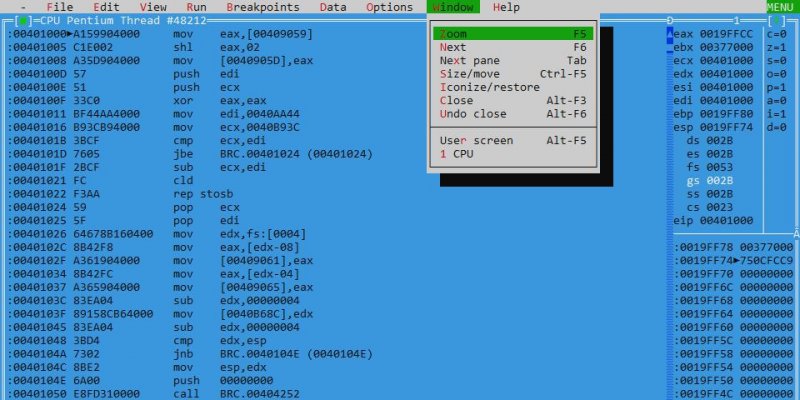
Turbo Assembler and Tools 5.0, often referred to as TASM, is an x86 assembler for MS-DOS and Microsoft Windows. As a key component of Borland's suite of development tools, TASM was packaged alongside Turbo Debugger (TD), forming the Turbo Assembler/Turbo Debugger (TASM/TD) bundle. Turbo Assembler was favored for its speed and compatibility with the popular x86 architecture, which was widely used in personal computers of the time. Borland was a software company known for its development tools during the 1980s and 1990s.
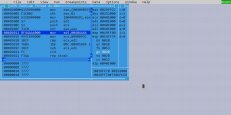
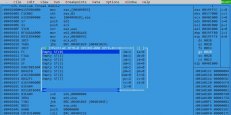
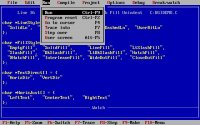
Turbo Assembler (TASM) screenshot
tasm-02.jpg - DOS
tasm-01.jpg - DOS
tasm-03.jpg - DOS
abandonware
what is abandonware?
Rating: 4.39 / 5.00 (44 votes)


Released in:
Graphics:

Share this application:

Turbo Assembler (TASM) abandonware downloads

DOS Applications made for DOS require an emulator to run on Windows. Use DOSBox or a frontend like D-Fend Reloaded and read this guide to play DOS games on your Windows PC.

WIN Applications made for older versions of Windows may not run on modern systems. Read this guide to learn how to run the game properly.

More information on Turbo Assembler (TASM)

Status: abandonware
Abandonware DOS views: 11524

Comments

  • ern0 31/07/2026 09:44
    TASM was extremely fast, just like other Borland compilers, e.g. Turbo Pascal. Of course, an assembler is significantly simpler than a modern high-level language compiler, but TASM stood out as the first assembler to perform compilation in a single pass. While processing the source code, if it encountered an unresolved reference - e.g. a forward jump, or some data/BSS declared later - it would generate a placeholder address. Later, when the compilation reached the referenced target, it would go back and complete those placeholders. There was only a few of failure cases, say, when a forward relative jump exceeded the range, otherwise, it worked quite well.
  • ern0 31/07/2026 09:36
    "Turbo Assembler was favored for its speed and compatibility with the popular x86 architecture, which was widely used in personal computers of the time" - not exactly. It's not wrong, but isn't right either, let me explain it.

    1. The x86 processor family owed its popularity mainly not to its own merits, but to IBM's decision to use it in their personal computer, which became not only simply popular, but a de-facto standard.

    2. "Compatible" makes it sound like it just happened to work, or the PC was one of the many platforms it was running on, which isn't right. It was explicitly an x86 assembler, made for the PC from the start, running under MS-DOS, with the main intent to creating programs for MS-DOS.
Write a comment
Have you ever played Turbo Assembler (TASM)? Did you like it? Did you hate it? Write something about it: share your experience, give us hints on how to properly run this application or simply say how much you loved it.

You may also like...

These are some of the abandoned applications similar to Turbo Assembler (TASM) in some way.
nortoncommander-5.jpg Norton Commander 5.5 borland-c1-03.jpg Borland Turbo C v1 norton-commander-3-02.jpg Norton Commander 3 norton-commander-1-04.jpg Norton Commander 1.0